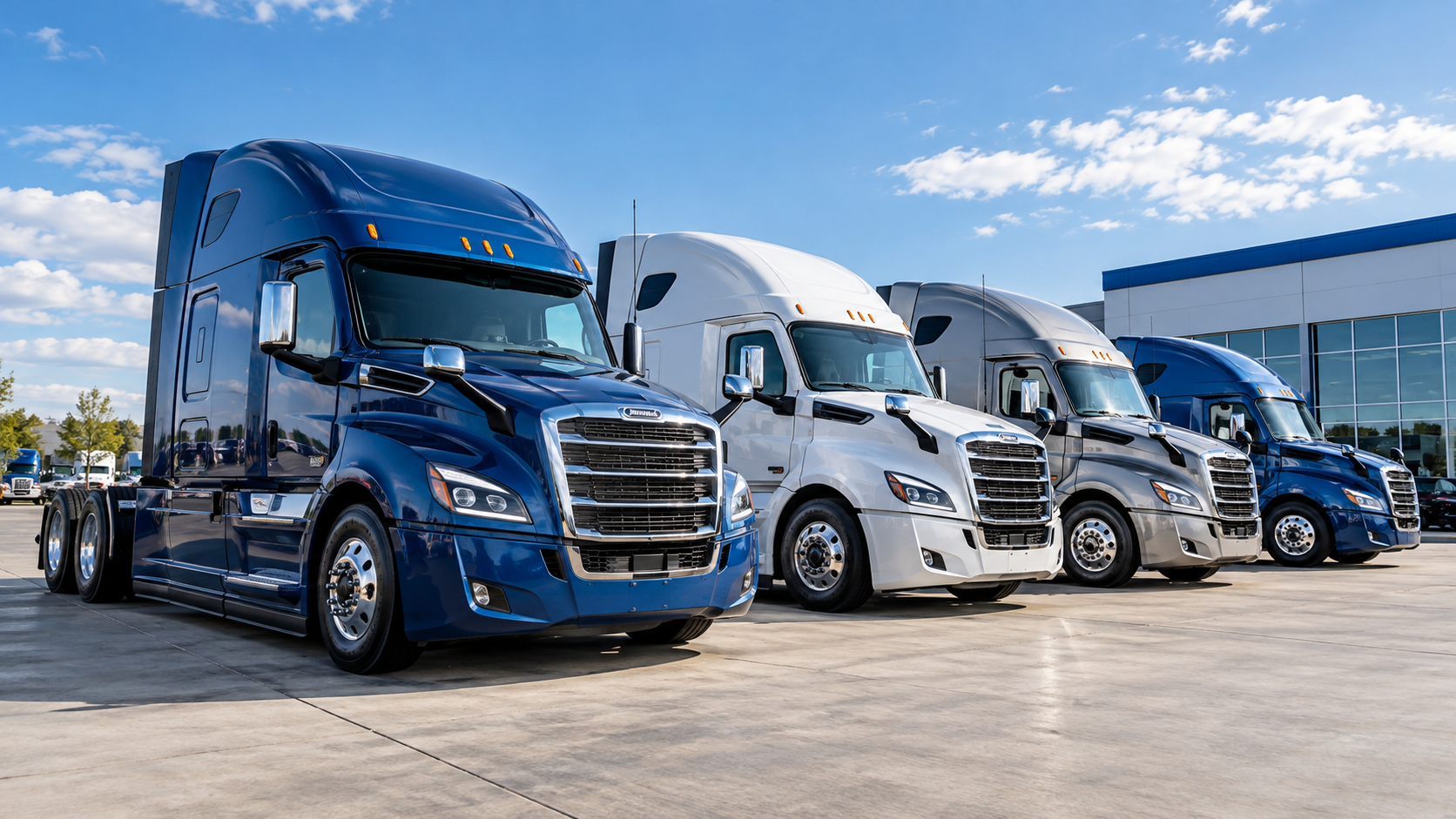
Buying a commercial truck involves several important steps, and arranging commercial truck insurance before delivery is one you shouldn’t overlook. Whether you’re purchasing your first truck, replacing an existing unit, or expanding an established fleet, having the right coverage in place helps protect your investment.
Between financing, dealership paperwork, inspections, and scheduling pickup, there’s a lot to coordinate. Insurance requirements can vary depending on how the truck will be used, whether it’s financed, and whether you’re operating under your own authority or leasing onto another motor carrier.
Here’s what trucking business owners should know before driving their next truck off the lot.
1. Do You Need Insurance Before Taking Delivery of a Commercial Truck?
In most situations, you’ll need to arrange appropriate insurance before taking possession of a commercial truck and operating it on public roads.
If you’re financing the truck, your lender will typically require proof of physical damage insurance protecting the financed equipment before releasing the funds or allowing delivery.
The dealership may also request evidence of insurance before completing the transaction.
But there’s an important distinction: having insurance on the truck doesn’t necessarily mean you’re properly insured to begin hauling freight.
The coverages you need depend on your business, operating authority, cargo, and intended use of the vehicle.
Coordinating with your insurance agent before delivery can help prevent unexpected delays.
2. What Types of Commercial Truck Insurance Should You Consider?
Primary Auto Liability
Primary auto liability insurance helps protect against covered bodily injury and property damage claims resulting from accidents involving your insured commercial truck.
For many interstate for-hire property carriers operating trucks with a gross vehicle weight rating of 10,001 pounds or more and transporting nonhazardous freight, the federal minimum is $750,000.
However, many freight brokers, shippers, and transportation contracts require $1,000,000 in auto liability coverage.
Requirements may differ based on vehicle size, commodities, operating authority, and applicable state regulations.
Physical Damage Insurance
Physical damage coverage helps protect the truck itself.
It generally consists of two coverages:
- Comprehensive: Protects against covered losses such as theft, fire, vandalism, and certain weather-related damage.
- Collision: Protects against covered damage resulting from a collision or overturn.
If your truck is financed, your lender will generally require both comprehensive and collision coverage.
You’ll also want to confirm that the lender is properly listed on the policy and that the insured value and deductible satisfy the financing agreement.
Even if the truck is paid for, physical damage insurance is worth considering given the potential cost of repairing or replacing commercial equipment.
Motor Truck Cargo Insurance
Motor truck cargo insurance provides protection for covered loss or damage to freight being transported.
Cargo requirements vary based on the commodities you haul and the contracts you accept.
Many brokers and shippers require at least $100,000 in cargo coverage, although certain operations and commodities may require higher limits or specialized coverage.
It’s also important to understand exclusions. Not every cargo policy covers every commodity or type of loss.
Additional Coverages Depending on Your Operation
Other coverages to discuss with your agent may include:
- General Liability
- Trailer Interchange
- Non-Trucking Liability
- Occupational Accident or Workers’ Compensation
- Excess or Umbrella Liability
- Rental Reimbursement or Downtime Coverage
Not every business needs every coverage. The right insurance program depends on how your company actually operates.
3. What If You’re Leasing Onto Another Trucking Company’s Authority?
If you’re purchasing a truck and planning to lease onto an established motor carrier, your insurance responsibilities may be different.
Some motor carriers provide primary auto liability coverage while the truck is operating under their authority, but that doesn’t mean the truck owner is automatically protected for every exposure.
Depending on the lease agreement, you may still be responsible for physical damage, non-trucking liability, occupational accident coverage, or other insurance.
Before taking delivery, verify exactly what the motor carrier’s policy covers, when that coverage applies, and which coverages you’re required to purchase separately.
Don’t assume the motor carrier’s insurance protects the financed value of your truck.
4. What Information Will Your Insurance Agent Need?
Providing complete information upfront can make the insurance process more efficient.
Your agent may request:
- Business name and operating authority information, if applicable
- Vehicle year, make, model, and VIN
- Truck purchase price or agreed insured value
- Lender or lienholder information
- Driver information and driving history
- Types of freight or commodities hauled
- Expected operating radius and states traveled
- Estimated annual mileage
- Requested effective date
- Current insurance information, if applicable
For established fleets, existing policy information and loss history may also be needed.
If you’re purchasing from a dealership, much of the equipment information is likely already available on the purchase documents.
5. How Long Does It Take to Get Commercial Truck Insurance?
The timeline can vary considerably.
For an established motor carrier adding a replacement truck, the process may be relatively straightforward, depending on policy provisions and carrier requirements.
For a new trucking business or a more complex operation, securing appropriate coverage may take longer because of additional underwriting requirements.
Factors that can affect the timeline include:
- New versus established operating authority
- Driver experience and driving records
- Type of freight being transported
- Truck value and financing requirements
- Prior insurance and claims history
- Availability of insurance carriers willing to insure the operation
The best approach is to begin discussing insurance before your scheduled delivery date, rather than waiting until the dealership asks for proof of coverage.
An insurance quote alone is not proof that coverage has been bound.
6. Commercial Truck Insurance Checklist Before Pickup
Before leaving the dealership, confirm the following:
- Your insurance agent has the correct VIN and equipment information.
- Required coverage has been bound and is effective before pickup.
- Auto liability coverage is appropriate for the intended operation.
- Physical damage coverage meets your financing requirements.
- Your lender is properly listed where required.
- All required drivers are disclosed and acceptable to the insurer.
- Your planned use, commodities, and operating radius have been accurately reported.
- You’ve received the required proof of insurance.
- Any required authority filings or endorsements have been addressed.
- You’ve confirmed whether additional coverages are needed before hauling your first load.
Taking a few minutes to verify these details can help avoid complications after the purchase.
7. How Trucking IQ Can Help
At Trucking IQ, we specialize in commercial transportation insurance for owner-operators, growing trucking companies, and established fleets.
We understand that purchasing a truck is about more than securing insurance. It’s about getting equipment on the road, protecting your investment, and keeping your business moving.
Whether you’re buying your first truck or adding another unit to your fleet, our team can help you evaluate your coverage needs, review lender requirements, and explore available insurance options.
Buying a commercial truck? Get ahead of the insurance process.
Contact Trucking IQ before your scheduled delivery so we can help you understand your options and what information will be needed to secure coverage.
Insurance coverage, availability, requirements, and effective dates vary by carrier, policy, jurisdiction, and operation. Coverage is not effective until confirmed bound by the insurer. This article is for general educational purposes.
← Back to Resources